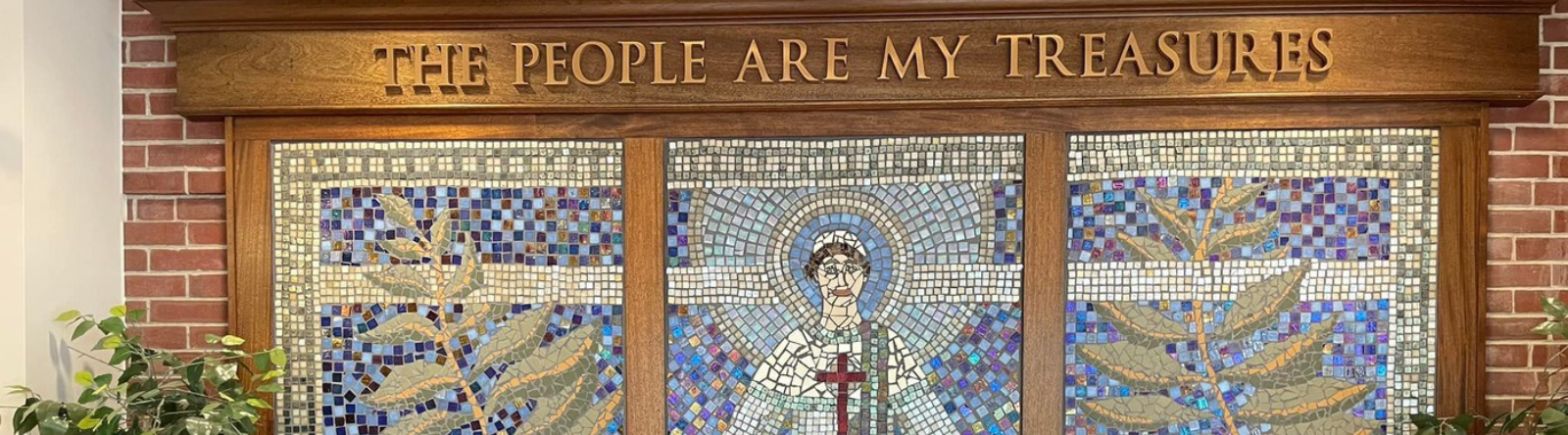
FAITH STATEMENTIt is our belief that there is a positive correlation between a child's health and well-being and his/her ability to learn. At St. Lawrence Catholic School, all children have the right to a faithfilled and healthy learning environment. We believe it is important and necessary to equip students with the necessary skills to establish lifelong habits that promote good health and well-being. MISSION STATEMENTSt. Lawrence Catholic School promotes health and wellness in mind, body and spirit BELIEFSSt. Lawrence Catholic School is
TO ACHIEVE OUR GOALS WE HAVE...
Goals for School Nutrition and Nutrition EducationSchool Meals will...
Meal Times and Scheduling
Sharing of Foods and BeveragesSharing of food or beverages among students is prohibited. This is necessary due to allergy and dietary concerns of some children. Celebrations and Classroom SnacksHealthy snacks will be encouraged during the school day and on special celebrations. Teachers will send home a list of suggested healthy snacks. Birthday celebrations will take place in this way:
Food as a Reward or Punishment
Nutrition EducationNutrition education is the responsibility of parents, teachers and administration. In order to promote healthy nutrition habits, St. Lawrence Catholic School will:
Goals for Physical Activity and Physical EducationPhysical Education
Recess and Physical ActivitySt. Lawrence provides opportunities for recess that:
St. Lawrence School provides physical activity opportunities outside of the school day that:
Goals for Spiritual Well-BeingSt. Lawrence recognizes that the spiritual well being of its students and teachers is a vital piece in reaching overall good health and wellness. Spiritual growth and development are emphasized on a daily and weekly basis, as well as at all sporting events and gatherings in which students participate. Daily
WeeklyTwice a week all students and teachers come together to celebrate Mass. Service OutreachSpirituality also shows itself in the active participation of students with regard to outreach. Our service outreach projects include, but not limited to, food drives, clothing drives, bake sales, penny drives, Riley Dance-a-Thon, and working with St. Vincent DePaul. Service HoursParents are encouraged to complete 20 service hours per school year, for the school. Health EducationClassroom teachers teach general health education. Topics such as basic nutrition, hygiene, tobacco, drug and alcohol education are incorporated into the science curriculum. Special guest speakers and field trips may be used for other topics such as human reproduction and sexuality. Health ServicesThe Communicable Disease Reference Guide for Schools provided by the Indiana State Department of Health is used as a reference in the school office for minor incidents that require basic first aid and/or intervention. OTC medications such as Tylenol will only be given with the written consent of a parent or guardian. Prescribed medication must be in its original container and sent in to the school office with written instructions on time and proper dosage to be administered. CPR AND FIRST AID TRAININGAll staff members and coaches are American Red Cross certified in CPR, AED, and First Aid every two years. Importance of SleepSleep is no less important than food, drink, or safety in the lives of children. Although this may seem apparent, many of us actually do not allow our children to get the critical sleep they need to develop and function properly. Children simply must have a sufficient amount of sleep to grow, develop, and function optimally. How much is right for your child varies by age. Remember, each child is unique and individual variation occurs. Vision and Health ScreeningThe following healthcare services are provided to students per mandates from the State of Indiana:
Students and parents will be notified prior to the date of each screening. It is recommended that each child have an annual physical and dental examination, as well as regular eye examinations, conducted by the appropriate professionals. According to the Indiana Department of Education, a student is to be temporarily excluded from attending school for any of the following:
VomitingThe parent will be called to pick up his/her child if he/she vomits at school and is thought to be contagious. In some instances, children gag easily and would not be sent home for non- contagious vomiting. Sometimes this can be difficult to determine. When in doubt, the parent will be called to pick up the child from school. Parents are encouraged to keep children home if he/she vomits during the night. Serious IncidentsIn the event of a serious accident during school hours, we will attempt to immediately notify a parent. If necessary, the student will be transported by ambulance to the appropriate hospital as determined by the medical emergency personnel. If an accident occurs during a field trip, the nearest medical care facility will be utilized. AccidentsIf a child has a minor accident and/or injury at school, parents will be notified electronically or by phone. If a serious accident/injury occurs, which may require additional medical attention; the staff will contact the parent and call 911. The EMT will decide the appropriate course of action at that point. The parent will be responsible for all medical charges. Blood-Bourne Pathogens - Exposure Control PlanEvery year the teachers are to be in-serviced on blood-bourne pathogens. The typed plan is located in the school office. This is also copied and placed in every teacher’s “class medical information folder.” Essentially, this standard of practice is for controlling your exposure to blood or other potentially infectious materials. Gloves are always to be used when handling any body fluids. The school office provides gloves. If you have been exposed to any body fluids, immediately wash area of exposure thoroughly with soap and water. A variance form needs to be filled out which is included in the information in your folder. A red biohazard container is located in the office for disposal of any body fluids. Every classroom should have gloves, red bags, and Band-Aids. ImmunizationsWhen a student enrolls in school, the student’s parent/guardian must provide proof that he student has been immunized or meet the requirements for exemptions from the State of Indiana. All new or updated immunization records are to be submitted to the school by the first day of school. The school reserves the right to terminate the admission of a student to St. Lawrence if immunizations are not up to date and records are not turned into the school office. All immunization records are to be entered into CHIRP after obtaining the parent’s permission. Epi-Pens/AllergiesAny child who has been prescribed an Epi-pen by a physician is to have the Epi-pen, liquid Benadryl, and an Allergy Action Plan turned in by the first day of school. Failure to comply may result in the delay of your child entering school. Allergies are a serious matter with the potential for serious medical problems. Medical ConditionsParents are asked to notify the school prior to the first day of any changes in allergies or medical conditions. Parents are to notify the school office staff with any changes in medical history throughout the school year. MONITORING AND POLICY REVIEWThe principal or designated person will ensure compliance with wellness policy and report findings to the Wellness Committee. The policy will be reviewed for any changes/updates annually. The School Nutrition Director will ensure compliance with the nutritional standards of food served and report the summaries of any state agency review to the principal. The Physical Education Instructor will prepare an annual report on improvements made by students throughout the year, using useful self-assessment tools as measurement. Report will be made to the principal or designated person/s. |
DECLARACIÓN DE FEEs nuestra creencia que hay una correlación positiva entre la salud y el bienestar de un niño y su capacidad de aprender. En la Escuela Católica de San Lorenzo, todos los niños tienen derecho a un ambiente de aprendizaje sano y lleno de fe. Creemos que es importante y necesario dotar a los estudiantes con las habilidades necesarias para establecer hábitos de por vida que promuevan la buena salud y el bienestar. DECLARACIÓN DE LA MISIÓNLa Escuela Católica San Lorenzo promueve la salud y el bienestar de la mente, el cuerpo y el espíritu. CREENCIASLa Escuela Católica San Lorenzo está
PARA LOGRAR NUESTROS OBJETIVOS TENEMOS...
Objetivos de la Nutrición Escolar y la Educación NutricionalLAS COMIDAS ESCOLARES...
HORARIOS DE LAS COMIDAS
COMPARTIR ALIMENTOS Y BEBIDASEstá prohibido compartir alimentos o bebidas entre los alumnos. Esto es necesario debido a las alergias y problemas dietéticos de algunos niños. CELEBRACIONES Y MERIENDAS EN CLASESe fomentarán los tentempiés saludables durante la jornada escolar y en celebraciones especiales. Los profesores enviarán a casa una lista de bocadillos saludables sugeridos. Las celebraciones de cumpleaños se llevarán a cabo de esta manera:
LA COMIDA COMO PREMIO O CASTIGO
EDUCACIÓN NUTRICIONALLa educación nutricional es responsabilidad de los padres, los maestros y la administración. Con el fin de promover hábitos saludables de nutrición, la Escuela Católica San Lorenzo:
Objetivos de la Actividad Física y la Educación FísicaEDUCACIÓN FÍSICA
RECREO Y ACTIVIDAD FÍSICASan Lorenzo ofrece oportunidades para el recreo que:
La Escuela de San Lorenzo ofrece oportunidades de actividad física fuera de la jornada escolar que:
Objetivos para el Bienestar EspiritualSan Lorenzo reconoce que el bienestar espiritual de sus estudiantes y profesores es una pieza vital para alcanzar una buena salud y bienestar general. El crecimiento espiritual y el desarrollo se enfatizan sobre una base diaria y semanal, así como en todos los eventos deportivos y reuniones en las que participan los estudiantes. DIARIO
SEMANALDos veces por semana todos los alumnos y profesores se reúnen para celebrar la misa. SERVICIO DE DIVULGACIÓNLa espiritualidad también se manifiesta en la participación activa de los estudiantes con respecto a la divulgación. Nuestros proyectos de servicio incluyen, pero no se limitan a, colectas de alimentos, colectas de ropa, venta de pasteles, colectas de centavos, Riley Dance-a-Thon, y el trabajo con San Vicente De Paúl. HORAS DE SERVICIOLos padres son animados a completar 20 horas de servicio por año escolar, para la escuela. Educación SanitariaLos profesores imparten educación sanitaria general. Temas como la nutrición básica, la higiene, el tabaco, las drogas y el alcohol se incorporan al plan de estudios de ciencias. Para otros temas, como la reproducción humana y la sexualidad, se puede recurrir a conferenciantes invitados especiales y a excursiones. Servicios SanitariosLa Guía de Referencia de Enfermedades Contagiosas para Escuelas proporcionada por el Departamento de Salud del Estado de Indiana se utiliza como referencia en la oficina de la escuela para incidentes menores que requieren primeros auxilios básicos y/o intervención. Medicamentos de venta libre como Tylenol sólo se dará con el consentimiento por escrito de un padre o tutor. Los medicamentos recetados deben estar en su envase original y enviarse a la oficina de la escuela con instrucciones escritas sobre la hora y la dosis adecuada para ser administrados. FORMACIÓN EN REANIMACIÓN CARDIOPULMONAR Y PRIMEROS AUXILIOSTodos los miembros del personal y los entrenadores están certificados por la Cruz Roja Americana en RCP, DEA y Primeros Auxilios cada dos años. IMPORTANCIA DEL SUEÑOEl sueño no es menos importante que la comida, la bebida o la seguridad en la vida de los niños. Aunque esto pueda parecer evidente, en realidad muchos de nosotros no permitimos que nuestros hijos duerman las horas críticas que necesitan para desarrollarse y funcionar correctamente. Los niños deben dormir lo suficiente para crecer, desarrollarse y funcionar de forma óptima. La cantidad adecuada para su hijo varía según la edad. Recuerde que cada niño es único y que hay variaciones individuales. EXÁMENES VISUALES Y DE SALUDLos siguientes servicios de salud se proporcionan a los estudiantes por mandato del Estado de Indiana:
Los estudiantes y los padres serán notificados antes de la fecha de cada examen. Se recomienda que cada niño tenga un examen físico y dental anual, así como exámenes regulares de la vista, realizados por los profesionales apropiados. De acuerdo con el Departamento de Educación de Indiana, un estudiante debe ser excluido temporalmente de asistir a la escuela por cualquiera de los siguientes:
VÓMITOSSe llamará a los padres para que recojan a su hijo si vomita en la escuela y se cree que es contagioso. En algunos casos, los niños se atragantan fácilmente y no serían enviados a casa por vómitos no contagiosos. A veces esto puede ser difícil de determinar. En caso de duda, se llamará a los padres para que recojan al niño en el colegio. Se recomienda a los padres que dejen al niño en casa si vomita durante la noche. INCIDENTES GRAVESEn caso de accidente grave durante el horario escolar, intentaremos avisar inmediatamente a los padres. Si es necesario, el alumno será trasladado en ambulancia al hospital adecuado según determine el personal médico de urgencias. Si se produce un accidente durante una excursión, se acudirá al centro médico más cercano. ACCIDENTESSi un niño sufre un accidente y/o lesión leve en la escuela, se avisará a los padres electrónicamente o por teléfono. Si se produce un accidente o lesión grave, que puede requerir atención médica adicional, el personal se pondrá en contacto con los padres y llamará al 911. El EMT decidirá el curso de acción apropiado en ese momento. El paramédico decidirá el curso de acción apropiado en ese momento. Los padres serán responsables de todos los gastos médicos. PATÓGENOS TRANSMITIDOS POR LA SANGRE - PLAN DE CONTROL DE EXPOSICIÓNTodos los años los maestros deben recibir una capacitación sobre los patógenos transmitidos por la sangre. El plan mecanografiado se encuentra en la oficina de la escuela. También se copia y se coloca en la "carpeta de información médica de la clase" de cada profesor. Esencialmente, esta norma de práctica es para controlar su exposición a la sangre u otros materiales potencialmente infecciosos. Siempre se deben utilizar guantes al manipular cualquier fluido corporal. La oficina de la escuela proporciona guantes. Si ha estado expuesto a cualquier fluido corporal, lave inmediatamente el área de exposición con agua y jabón. Es necesario rellenar un formulario de desviación que se incluye en la información de su carpeta. En la oficina hay un contenedor rojo de riesgo biológico para desechar cualquier fluido corporal. Cada aula debe tener guantes, bolsas rojas y tiritas. INMUNIZACIONESCuando un estudiante se inscribe en la escuela, el padre/tutor del estudiante debe proporcionar prueba de que el estudiante ha sido vacunado o cumplir con los requisitos para las exenciones del Estado de Indiana.
EPI-PENS/ALERGIASCualquier niño a quien un médico le haya recetado un Epi-pen debe tener el Epi-pen, Benadryl líquido y un Plan de Acción para la Alergia entregados el primer día de clases. El incumplimiento de este requisito puede dar lugar a un retraso en el ingreso de su hijo a la escuela. Las alergias son un asunto serio que puede causar problemas médicos graves. PROBLEMAS MÉDICOSSe ruega a los padres que notifiquen a la escuela antes del primer día cualquier cambio en las alergias o afecciones médicas. Los padres deben notificar al personal de la oficina de la escuela cualquier cambio en el historial médico a lo largo del año escolar. SUPERVISIÓN Y REVISIÓN DE LA POLÍTICAEl director o la persona designada velarán por el cumplimiento de la política de bienestar e informarán de los resultados al Comité de Bienestar. La política será revisada anualmente para cualquier cambio/actualización. El Director de Nutrición de la Escuela asegurará el cumplimiento de los estándares nutricionales de los alimentos servidos e informará los resúmenes de cualquier revisión de la agencia estatal al director. El Instructor de Educación Física preparará un informe anual sobre las mejoras realizadas por los alumnos a lo largo del año, utilizando como medida herramientas útiles de autoevaluación. El informe se presentará al director o a la persona o personas designadas. |